
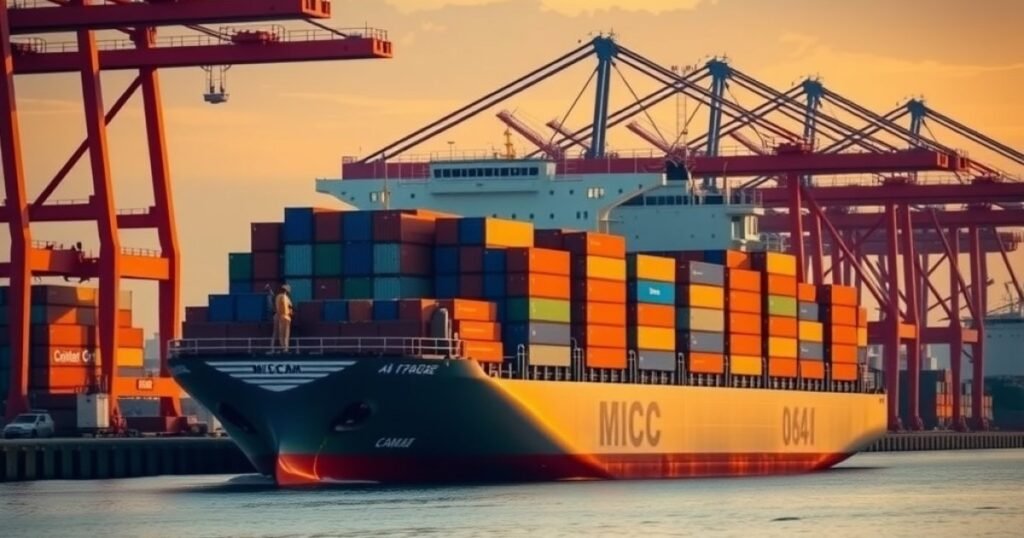
If you buy from Chinese suppliers, understanding Incoterms for China imports is one of the quickest ways to avoid surprise costs. Incoterms are standard trade terms published by the International Chamber of Commerce (ICC) that say who arranges and pays for transport, who handles export and import clearance, and the point at which risk passes from seller to buyer. The current edition is Incoterms 2020. This guide explains the four terms Chinese suppliers quote most often, EXW, FOB, CIF and DDP, and how to choose between them.
What Are Incoterms and Why Do They Matter?
An Incoterm is a short three-letter code written into your quotation, proforma invoice and contract. It does not set the price of the goods or transfer ownership by itself, but it decides three practical things: who pays for which part of the journey, who is responsible for export and import customs clearance, and who carries the risk of loss or damage at each stage. Two quotes for the same product can look very different on paper simply because one says EXW and the other says CIF.
Incoterms 2020 contains 11 rules. Some can be used for any mode of transport, while FOB, CIF, CFR and FAS are intended for sea and inland waterway transport only. Many suppliers use them loosely, so always write the term together with a named place, for example FOB Shenzhen or CIF Hamburg, and state that you mean Incoterms 2020.
EXW (Ex Works): Maximum Responsibility for the Buyer
Under EXW the supplier makes the goods available at their factory or warehouse, and that is where their job ends. As the buyer you typically arrange pickup, loading, export clearance in China, main freight, import clearance and delivery. It looks cheapest on a quote, but it also puts the most work and risk on you.
- Good for: experienced importers with a forwarder in China who can collect from the factory and handle export formalities
- Watch out for: the supplier is not responsible for loading, and export clearance in China is awkward for a foreign buyer without a local agent. Hidden local charges can appear if they are not agreed upfront
- Tip: if you want a low factory price but need help, ask your forwarder to quote the full door-to-door route so you can compare it properly
FOB (Free On Board): The Most Common Term for Sea Freight
With FOB the supplier delivers the goods, cleared for export, on board the vessel you nominate at the named port of shipment, such as FOB Ningbo or FOB Shanghai. The seller pays for local transport to the port, export clearance and loading charges at origin. Risk passes to you once the goods are on board, and you pay the ocean freight, insurance, destination charges and import duties and taxes.
- Good for: importers who want control of the main freight and to choose their own forwarder, which usually gives more transparent shipping costs
- Watch out for: FOB is meant for sea freight. For containerised cargo that is handed to a terminal before loading, the ICC suggests FCA (Free Carrier) can be a better fit, so ask your forwarder which suits your shipment
- Tip: nominate your own forwarder and agree the port in writing, so origin charges are limited to what the supplier really controls
CIF (Cost, Insurance and Freight): Seller Arranges Sea Freight
Under CIF the seller pays the freight to the named destination port and arranges minimum insurance, but risk still passes to you once the goods are loaded on the vessel in China. That surprises many first-time buyers: the seller pays for the voyage, yet you carry the risk during it. Under Incoterms 2020 the default insurance for CIF is minimum cover (Institute Cargo Clauses C), so you may want to buy broader cover yourself.
- Good for: buyers who want a simple quote to their nearest port and do not want to book shipping themselves
- Watch out for: the supplier chooses the carrier and routing, destination port charges are usually still yours, and customs value in many countries includes freight and insurance, so check how this affects duty and VAT
- Tip: compare the CIF freight cost with an independent forwarder quote before you accept it. See our guide to sea freight from China to Europe for typical cost factors
DDP (Delivered Duty Paid): Door-to-Door With Duties Included
DDP puts the maximum responsibility on the seller. The seller delivers the goods to your named destination, cleared for import, and pays freight, import duties and taxes. It is attractive because the price appears all-in. The catch is that the seller must be able to clear customs properly in your country, and some suppliers who offer DDP rely on informal clearance arrangements or under-declare values, which can create problems for you later.
- Good for: small buyers who want one price, provided the DDP provider is a reputable company that clears goods legally and gives you full paperwork
- Watch out for: unclear VAT treatment, missing import documents you may need for your own accounts, and difficulty if goods are held by customs
- Tip: ask exactly which taxes are covered, who is the importer of record, and request copies of the customs entry. Our China to UK freight guide explains how VAT and duty work on UK imports
Incoterms Compared at a Glance
- EXW: buyer arranges nearly everything from the factory door; lowest supplier price, highest buyer workload
- FOB: seller delivers on board at the Chinese port; buyer pays main freight and later costs
- CIF: seller pays sea freight and minimum insurance to your port; buyer still carries risk from loading
- DDP: seller delivers cleared and duty paid to your door; simplest for you, but needs a trustworthy provider
Which Incoterm Should You Choose?
There is no single best answer, but a few rules of thumb help. If you already work with a forwarder you trust, FOB (or FCA for containers) usually gives the clearest view of costs because you control the main freight. If you are new to importing and want predictability, a forwarder offering a clear door-to-door service may be easier than managing EXW yourself. Avoid accepting any term you do not fully understand, and never rely on the abbreviation alone.
Also think about the other Incoterms. FCA is often used for containers and air freight, DAP (Delivered at Place) is common for door delivery where you handle import clearance, and CPT/CIP are used for non-sea transport. Whichever you choose, the same three questions apply: who pays, who clears customs, and who carries the risk.
Common Incoterm Mistakes When Importing From China
- Not naming a place. FOB alone is not enough; the port or location must be written
- Assuming the supplier insures the goods. Under FOB and EXW you must arrange insurance yourself, and under CIF the cover is only minimum
- Ignoring local charges. Terminal handling, documentation fees and export clearance costs can differ between quotes. Ask what is included
- Comparing quotes with different terms. An EXW price and a CIF price are not comparable until you add the missing costs
- Using sea-only terms for air cargo. FOB and CIF do not fit air freight. Use FCA, CPT or CIP instead
How China Cargo Hub Can Help
We help importers from the UK, Europe, USA, Canada, Australia, New Zealand and the Gulf turn supplier quotes into a clear shipping plan. We can collect goods from the factory, consolidate several suppliers, and ship by sea, air or rail. Free warehousing in China is available for reliable repeat customers. Read more about our freight services, or see how timing affects your plan in our Chinese New Year 2027 shipping guide.
Frequently Asked Questions
What does FOB mean when importing from China?
FOB (Free On Board) means the supplier delivers the goods on board the vessel at the named Chinese port, cleared for export. After that point you pay for and carry the risk of the main journey.
Is EXW or FOB better for importing from China?
FOB is usually easier because the supplier handles loading and export clearance in China. EXW can work if you have a forwarder who handles pickup and export formalities, but it places more responsibility on you.
Does CIF include customs duties?
No. CIF covers sea freight and minimum insurance to the destination port, but import duties, VAT and destination charges are normally paid by the buyer.
Is DDP safe when buying from China?
It can be, if the provider is reputable, clears goods legally and gives you the customs documents. Ask who the importer of record is and exactly which taxes are included.
Which Incoterms are for sea freight only?
FOB, CIF, CFR and FAS are intended for sea and inland waterway transport. For containers and air freight, FCA, CPT or CIP are usually more suitable.
Which Incoterms edition should I use?
Incoterms 2020 is the current edition. Write the term, the named place and the edition in your contract, for example FOB Shanghai (Incoterms 2020).
Get a Clear Shipping Quote From China
Send us your supplier quote and tell us the Incoterm they offered, and we will help you work out the full cost and the best route. Contact us on +86 132 8863 7701 or use the button below.